Total Pageviews

Showing posts with label death. Show all posts

Friday, 19 April 2024

PLENI SUNT


·      “I am the Resurrection and the Life. He that has faith in me, even though he dies, shall live. And all that live and have faith in me shall never die.” (John 11:25)

·      Why are we believers not in a state of perpetual wonder at the magnitude of the gift we have received? Perhaps because we are not often faced with evidence of it in our daily lives. Getting and spending we lay waste our wonder. Worse, infirmities and blows befall us, and worse befalls the Umwelt, the wider world; all of which the Adversary incites us to parse as counter-evidence.

·      Is there, then, a way back, or forward, into recognition and thus renewal? Yes.

·      Pleni sunt cœli et terra gloria tua. We live, move and have our being in an ocean of God’s glory. Oh yeah? say our atheist friends. Yeah.

·      Begin at beginners’ level: an April day in the Southern French countryside. Everything is in flower, from the humble campion via pale irises and roses’ intensity to the pouring gold of laburnums and the Tyrian shout of Judas-trees. Bees crawl over the wistaria in an ecstasy of fulfilment. A cuckoo sounds in the distance. Bright golden sunshine touches your eyelids, and a cool breeze murmurs to your hair. Yes, you say to yourself: this one’s easy. Nature doesn’t get much better. Glory is all about.

·      The Spoiler, though, is only briefly embarrassed. Look, he says. You are walking slowly, with two sticks. You discover a new pain every day. You have prostate cancer. Your neighbour has had much of his intestine removed and carries a stroma. One of your friends ended up, too young, with amyotrophic lateral sclerosis. Your mother died of a stroke after five interminable years of Alzheimer’s. Glorious?

·      After a brief prayer you reply, Yes. I am here, giving thanks and praise; not only for Thibault the donkey whose nose I just stroked, but for his lookalike, the young radiotherapist who treated my cancer, and the tireless ladies who tended his machine. My neighbour has kept his huge echoing laugh and every scrap of his fighting soul. My friend was cared for with extraordinary love by his wife, a nurse, and his condition brought his friends and colleagues to organise an entire small conference in his honour, in his own remote city, where he was surrounded by honour and affection in his last year. And my mother’s illness brought out in my father a depth of sacrificial love and self-abnegation neither he nor we dreamed he possessed. All conditions of the earth earthy; but that terra was and is plena also of glory.

·      The Contrarian gnashes his teeth, allowing you at last to hear what that sounds like. As we know, he is expert at teleportation; and he whisks you in a whoosh to another part of the country where the houses are experiencing their fifth flooding in two months, women and men are hopelessly piling furniture and working mops and pumps and discovering that their insurance has found an excuse not to pay up even as their walls crack and peel with the absorbed moisture. Aye, he grins. There’s glory for you.

·      But his eyes darken as the Fire Brigade appears. The young men and women are all volunteers, part-timers, the friends and neighbours of the afflicted, They turn up with boats of several kinds, helped by local farmers with tall tractors that brush aside the water; they help the elderly out of their flooded houses, wrap them in blankets and take them to the high-school gym where other volunteers are already preparing hot coffee, tea and cocoa, as well as comforting hugs. Glory creeps in through the windows and swirls invisibly among the rafters. Level Three, and it’s still there: stronger than ever, perhaps.

·      Now the Enemy switches on the television even as he tunes your smartphone to three different social networks simultaneously. As casualty figures from Sudan mingle with Russian atrocities in Ukraine, Islamist decapitations in the Middle East and teenagers kicking other teenagers to death in a Parisian suburb, he grins. Gloria in excelsis? he hisses.

·      Yes, well, this is the graduate course. Were you ever told it was going to be easy? You go back and pray. Time out: need to work on this one. And yet, and yet, something comes tiptoeing out of the wreckage and the gore. Something difficult at first to identify, but call it Horror. You can see it in the faces of the reporters in Boutcha, in the womens’ eyes behind the niqabs, and in the classmates of the French teenagers as well as their parents. It is a strange glory, this: it crawls with agonizing slowness from Fear to No Complicity to Resistance – and it is a glory, perhaps the greatest even: a glory crowned with thorns.  

·      So: pleni sunt cœli et terra gloria tua? Indeed they are; but often unexpectedly. Which brings us back to That Man. Yeshua Meshiach. Who was expected to turn up as a new King David, with an army, to take Jerusalem and then make the Romans an offer they couldn’t refuse; and who instead appeared as a tall, bony itinerant rabbi striding through the North Country, preaching in villages an unlikely message of returning the measureless love of an invisible Father and extending risky affection to troublesome neighbours. A supposed monarch who rode into town on a donkey; a holy man who let himself be put to a hideous death with slaves and killers; a dead man who came back and ate fish on the beach with his friends. From his life to his message to his return, everything about him is unexpected. You can’t make this up. This isn’t a religion: gods don’t act like this. Gods drink nectar on mountaintops and flirt with nymphs.

·      So, this being the case, we may expect gloria sua also not always to be probable either. And it works both ways. If we learn to recognize the glory, from the laburnums all the way to the resistance, then perhaps we can begin to understand the Gift – a Gift which, like the glory, lives below and beside our everyday life, an insistent and reassuring heartbeat. A vita eterna that has already begun, coursing silently but mightily through our days, always only the whistle-thin membrane of a prayer away.

Sunday, 24 March 2019

OF FALLING TOWERS AND WAYS TO DIE


At that very time there were some present who told him about the Galileans whose blood Pilate had mingled with their sacrifices. 2 He asked them, ‘Do you think that because these Galileans suffered in this way they were worse sinners than all other Galileans? 3 No, I tell you; but unless you repent, you will all perish like them. 4 Or those eighteen who were killed when the tower of Siloam fell on them—do you think that they were worse offenders than all the others living in Jerusalem? 5 No, I tell you; but unless you repent, you will all perish like them.’


To the question ‘does shit happen to sinners because they have sinned?’ Yeshua answers, No. There is no necessary connection between nasties that happen to us and the moral quality of our antecedent behaviour. That is already a huge thing to say. Because what it implies is that Shit Happens. Sometimes it’s an Act of Nature: a woman I knew was killed climbing in the Rockies when thaw dislodged a stone 1200 feet above which fell and cut her rope. Sometimes it’s somebody’s fault: that tower in Siloam may have had a fault in the foundation because of somebody’s negligence. But it is not the victim’s fault.

Moreover, Shit Happens, and when it does it is not God’s fault. This is much harder to conceive. God does not micromanage this or, we may assume, any other planet. God knows when every sparrow falls; but He does not stop its falling. Why not? Because, first, the whole life of the planet is based on mortality and replacement. We need to die to make room for our grandchildren. The tree bears seed so that a new tree can replace it. So why, then, not make mortality such that each human dies in a kindly and harmonious way? Because even when a loved person dies at the right moment, for those around, weeping, it is still a trauma, the moment is never right. And finally, we forget Satan at our peril. His presence – tempting us to sin and busily collecting our IOUs -- ensures that much that might have been harmonious will not be.  

Then Yeshua goes on to say, ‘but if you do not turn your mind around, you will perish like them.’ My daughter, in her sermon, elaborated that beautifully in saying that we need to turn from our pages and screens and news cycles to ‘bask in God’s love’ – which will necessarily make us pass on that love to others. But what also intrigues me is the ‘perishing like them.’ The point here, I think, is that we all die, whether peacefully in our beds, painfully in a hospital, horribly in a car crash or a fire, or among many in a natural disaster (see Leonard Cohen’s moving song ‘Who by Fire’, based on a Day of Atonement text). So why does He say ‘unless you turn around’? Will that exempt us from mortality? No – we know that. But if we have turned definitively to God – which means turning to the Anointed One – we will die, but not like them. We will die differently. We will die in the warmth of God’s love, and whatever awaits us on the other side will be a form of that. 


Photo: New York, September 11, 2001, by Detective Greg Semendinger, New York City Police Aviation Unit.  

Friday, 2 November 2018

BEYOND MOURNING


In Latin countries, and possibly in Eastern Europe also, it is demotically known as le jour des morts, the Day of the Dead. Chrysanthemums are put on graves freshly cleaned and full of photographs of the deceased. Officially, the Catholic churches, Roman, Orthodox and Anglican, refer to it as the Feast of the Souls of the Faithful Departed, or All Souls' Day. Its purpose was, and mostly still is, to pray for the souls of those who have left this life, to help them on their way, to assist them in Purgatory and to aid them in the progress of the purgation that will ready them for Heaven. There is something deeply comforting in this schema, which intellectuals may doubt but cannot disprove. How it can combine with the equally strong, and to many comforting, belief that the deceased loved ones watch over those of us still in the world is not clear; but we may perhaps reply with Tertullian, Credo quia impossibile, I believe because it is impossible, or with Christ, To the Father nothing is impossible.

There is nothing one can say about death that has not been said so many times before that it is commonplace. It is absolute: that bourn/ from which no traveller returns. (Except, of course, he whose love was stronger.) We are prevented from knowing what, if anything, takes place beyond the curtain. Also, it is usually accompanied with pain and grief, both sometimes excruciating. We can discuss it only in images; and there are two of those I have always found consoling. 

The first comes to one when one stands beside a waterfall. One sees a twig, perhaps, or a leaf, borne tranquilly upon the stream towards an edge of which it has no idea. Then it disappears into the crashing maelstrom of white foam and booming noise. And then, at the bottom, we see it surfacing, rather awkwardly at first, and continuing on its way downstream. So, in the days when the thought of death haunted and terrified me, my mantra was The river flows on below the falls.

The second image is that of the caterpillar, which (as far as we know) lives its laborious and earthbound life in complete ignorance of the glorious butterfly it will become when that stage of its living is finished. If we do not know what happens to us after death, it is perhaps because there is no need for us to know: it might ruin our caterpillarity if we did.

What we do know is that Love is stronger even than death. Not, now, in the sense that true lovers can face it together or remain true after the decease of one; no, in the sense that the One who was Himself true Love did not refuse that road, took it for our sake, and emerged on the other side, first to broil fish on a lake beach and to invite his stupefied mourning friends to breakfast, and finally to precede us to his, and our, Father's house. 

The thought that by the time we die we are not perhaps exactly ready for that new house, that our wedding garment in rumpled, stained, a little torn and in serious need of a hot iron, should make us deeply thankful for the doctrine of Purgatory. We are told that our stay there will be hard work and not always agreeable; but there is light and warmth and welcome at the end. Our love and assistance should go to those who are already there and whom our support will hearten in their tasks; our pity should be reserved for those who have made themselves incapable of even desiring God's love and to whom, as C.S. Lewis wrote, His presence in æternitatem would be torture. They dwell in outer darkness, capable of receiving only that final mercy of His absence.  

Will they do so forever? Is the 'gnashing of teeth' eternal? Theologians from Origen on have doubted, even as stern moralists have insisted. The word to remember in this context is apokatastasis or "restoration": the idea that at the end of time everything will be "restored" to its original state -- and the original state of man, of course, was sinless. Some theologians have even extended apokatastasis to Lucifer and his fallen angels, maintaining that eventually the whole of Creation will be "saved" -- restored to a harmonious and loving relationship to its Creator. 

In the meantime, let us remember those who have preceded us, let us send them the loving thoughts and prayers that they will surely welcome. 


Monday, 23 April 2018

DIFFICULT QUESTIONS. PRAY FOR DISCERNMENT . . .


I have been reading the second volume of Pope Benedict XVI’s Jesus of Nazareth, on Holy Week, the Passion and the Resurrection, and find it staggering in its intelligence and understanding. I will be putting up a few quotations here from time to time,  but for now I’m just trying to come to terms with what it has made me understand, or understand better.

For example, the Last Supper. While Mark, Matthew and Luke see it as a Passover meal, John does not. Benedict, I think intelligently, agrees with John, as the Jewish authorities themselves at one point say, “We can’t arrest and kill him on the feast” (of Passover) as they were afraid it would cause riots and might in any case be seen as blasphemous. However, as one scholar B cites puts it, Jesus knows he is going to die, and as he is now himself both priest and sacrificial victim, he institutes a new Passover on the night before the old official one. The Last Supper is the institution of the new Passover. And the early Church understood the intense link between the Last Supper and the Resurrection in instituting the “breaking of bread”, i.e. the first Eucharist, on the morning of the Resurrection, i.e. the “first day of the week”, Sunday.

Jesus as “priest and victim both” of a new Passover leads to another thought. Our local parish priest Jean-Kamel regularly insists on the fact that "at your baptism you were made a priest, a prophet, and a king!” He is referring, of course, to 1 Peter 2:9, as well as  Exodus 19:5–6, First Peter 2:4–8, Book of Revelation 1:4–6, 5:6–10, and the Epistle to the Hebrews. He uses this mainly to encourage the congregation to witness and evangelisation (as I said earlier, he is a convert, and an enthusiastic and somewhat charismatic one). It does, though, raise the old question, more urgent in and since Luther, of the “priesthood of all believers”. This is mainly a Protestant concept, yet the Catholic church accepts it also – as long as it doesn’t interfere with the ordained priesthood.

It leads me to two questions. First: if Jesus is priest and victim in his Passover, i.e. his crucifixion and resurrection, is the “priest” that I am also priest and victim in my own little Passover? After all, I shall die, and as a believer I am promised a resurrection. Is that process my own Passover, and part of my imitatio Christi? If so, to be true my Passover, like his, must be in some way and measure for others. Second, if I am by my baptism a priest, does that allow me – for example, in an extreme situation where no ordained priest is present – to consecrate bread and wine and forgive sins? If so, my faith has just taken on a huge new dimension of seriousness and responsibility.

But if the answer to both those questions is No, then what Jean-Kamel tells us is simply a figure of speech, an edifying image. A priest? Well, no. A prophet? Not really. A king? You’re kidding.

This links up with all sorts of other difficult questions, like the ones developed in Graham Greene’s The Power and the Glory; but those will have to wait for another time.


Saturday, 31 March 2018

EASTER WITHOUT MARKERS

For a variety of reasons, this Easter season has been very different. No church services, much busyness, absolutely nothing conducive to quiet, ritual, or contemplation. What to do in such a case?

What it has done is make me think more deeply about the Passion and the Resurrection, quite apart from ritual and in ways more individual than ecclesial. On Good Friday I awoke at 5 and spent two hours meditating on the day. I’ll share some of the thoughts.

      1.     The Anglican Communion service reads, in the Prayer of Consecration, “On the night that he was betrayed . . .” The new Catholic version says “On the night that he entered freely into his Passion . . .” At first I used to trip over this last version, but I have come to agree with it and like it (except rhythmically). It emphasises Yeshua’s willed accord with the Father’s will; his clear understanding that this death, grisly as it was, was the whole point of the Meshiach’s life and activity. Contrary to much Messianic thinking that wanted a new David to deliver Israel from its enemies, Yeshua’s interpretation was that of Isaiah. The Meshiach’s role went infinitely further than that of a political liberator: it aimed to liberate humanity from its Enemy – Satan, sin, and death. And this was possible only through the Meshiach himself becoming the Paschal sacrifice. So, human indeed, he quakes, he grieves, but he nevertheless goes forth. The Anglo-Saxon Dream of the Rood is doubtless factually wrong but also spiritually right in seeing Christ as a “young hero” voluntarily ascending the Cross.
      
      2.     I am always fascinated by the fact that his last words were two quotations from the Psalms. That shows, to cite Bonhoeffer, the degree to which the Psalter was Yeshua’s prayer-book. Having tried to say Morning and/or Evening Prayer regularly during Lent, I found reading through the Psalter one of the most moving parts of the experience. It is so wonderfully Jewish in its constant dialogue with the Creator: thankful, suffering, indignant (“Up, Lord!”), cursing, adoring and praising, it shows us how to relate to a sometimes distant and almost always (ostensibly) silent God.

      3.     The Crucifixion was necessary, because without it there could be no Resurrection. Perhaps what it teaches us is that our death too is necessary, and that we too follow him in a resurrection: not in the flesh – as his had to be, temporarily, to make people understand – but in the “body” of our post-mortem life, whatever that may look and feel like. No caterpillar, I suspect, has the faintest idea beforehand of what it feel like to be a butterfly.

      4.     Yochanan, St John the Evangelist, after whom I was named, thrills me, not only because of his mystical understanding and his poetic writing but because he was the only disciple not to have fled the Cross. He and the women stayed till the end. Perhaps that is one reason for the depth of his comprehension? It came to equal Miriam’s, which is why it was he who was detailed to look after her.

      5.     “Give us that peace which the world cannot give.” This impresses itself upon me more and more. The world can give suffering; the world can give comfort, and fun. But it cannot give true peace. When I look at those who live without faith, I mostly see a deep underlying sadness; those who live in faith are not exempt from pain and suffering, but they see meaning and coherence, and know that they are loved. 

      6.     The paradox of the Cross is inexhaustible. Its horror is bottomless, its joy is endless.


      7.     What, exactly, is the Good News that Yeshua preached? That you are not bound nor bounded by your self. That the Kingdom, the Reign, of God is here now. That it is the reign of Love, and that what you have to do, all you have to do, is relax and let it take you over. That you need to open the windows, doors and shutters of your soul and let the Ruach, Pneuma, Spiritus in. That if you live from day to day, hour to hour, by what it tells you, the Father, Son, and Spirit will come and live in you. That you are loved as you are, not as you might be if you were a better person. (That is really and truly hard to take on board!) That you can live day by day in subservience, in filial or servantlike devotion to something, Someone, greater than you are without losing your independence or your pride. On the contrary, it will increase your stature by making it irrelevant.  

Wednesday, 13 September 2017

THE BEAUTY OF HOLINESS


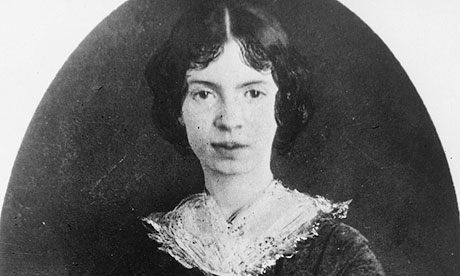
I came upon this poem again (in my post of 20 October 2014), by the matchless Emily Dickinson, and could not resist putting it up here. It has everything: mystery, beauty, and faith. We sometimes tend to see "the beauty of holiness" as "the holiness of beauty": let this small gem, where the two are in exact and perfect suspension, be a lesson to us. 


The feet of people walking home
With gayer sandals go ---
The Crocus --- till she rises,
The Vassal of the Snow —
The lips at Hallelujah!​        
Long years of practice bore,
Till bye and bye these Bargemen
Walked singing on the shore.
  
Pearls are the Diver’s farthings
Extorted from the Sea ---​        
Pinions --- the Seraph’s wagon
Pedestrian --- once, as we —
Night is the morning’s Canvas
Larceny –- legacy ---
Death, but our rapt attention​        
To Immortality.
  
My figures fail to tell me
How far the Village lies ---
Whose peasants are the Angels ---
Whose Cantons dot the skies ---​        
My Classics veil their faces ---
My Faith that Dark adores ---
Which from its solemn abbeys
Such resurrection pours.