Total Pageviews

Showing posts with label poetry. Show all posts

Sunday, 26 November 2023

A MONARCH AND HIS AWKWARD SUBJECTS


The Church tells me that Stir-up Sunday is actually the feast of Christ the King of the Universe, and my unreconstructed mind wonders what to do with that concept. If He is King of the world, the world clearly is unaware of the fact, like South Sea Islanders in the 18th century ignorant of the fact that their island now belonged to King George III. Also, in such a case, He is having a hard time making his laws obeyed and encouraging His subjects to keep the kingdom in good order. If He is King of the Universe it becomes more comprehensible: so many trillions of planets to look after, maybe it’s been centuries since He looked at ours.   

The real point may be to remind us that we are idle if not actually rebellious subjects, and that we may not be able to get away with this for ever. We are, as St Teresa reminded us, the only arms, hands, legs and eyes God has on this planet. It may be, as astrophysicist Aurélien Barrau reminds us, that we are already too far gone in collective suicide for anything feasible to save us; it may be that our race’s evolution since 1600 has been a disastrous mistake; it may be that we really were meant to go on living as hunter-gatherers with a 35-year life expectancy. In that case, what should our reaction be as children of a loving God?

Given the unlikelihood of any government on the planet’s being ready to turn the clock back 500 years, we might simply concentrate on the two commandments to which our King reduced the 613 He inherited: to love our Father with all our heart, all our soul, all our mind and all our strength; and to love our neighbor as ourself.  

For the first, that means praying more which, as French bishop Olivier de Cagny reminded us recently, means listening more. Solomon, when God offered him whatever he pleased as a new king, asked for a listening heart. We listen to others, if we are wise; but do we listen to Him? More often, we bombard him with requests, as if we were children yelling to Santa. We might learn to shut up and listen more. 

The link between the two commandments is praying for others. Again, though, let’s not make it a wish-list: our loving Father knows perfectly well what we should like for those we love (and perhaps even for those we love less). What praying for others means is helping to place them in the trajectory of the Father’s love, commending them to His attention, and (thus) adding our strength to theirs in their need. 

So now we are in the second commandment which, the Gospel tells us, is “like unto” the first. Not the less for being second, in other words. And yet without the first to order and protect it, it turns the Ekklesia that is the Church into a humanitarian NGO that will eventually succumb to some form of original sin. So we should be as the good Samaritan – do what we can for the needs around us, privileging the hic et nunc, the here and now rather than the distant and mediatised – and then continue our journey, always praying.

For this Kingdom of the Universe, for this kingdom of a fevered planet, prayer is still the most important of all languages, of all sciences, of all music and of all poetry. Even as we work even as we play, even as we suffer, let us be His troubadours: artists and poets of prayer. That is what hope is made of. 


Friday, 26 July 2019

A VAST POEM - DEPTH AND POWER


It is surprising and rewarding to read again the immense ode, the vast laudation, that is the 119th Psalm. Like many, I used to skip over it: it was long and boring and repetitive, and kept muttering about law and statutes and commandments and testimonies. Gradually, as I spent more time reading Psalms, this one began to get my attention. First I looked up all those words, and realised that while they can, in a pinch, be distinguished, they are in the poetic sense semi-synonyms, and to be taken as such. Then I discovered that the breaking-up of Ps. 119 into 8-line sections was not a quirk of the Vulgate but an original feature, since each section begins with a consecutive letter of the Hebrew alphabet. It is, therefore, either a stanzaic poem or an organised collection of short poems around a central theme: the praise of God’s law.

I think it was C.S. Lewis who reminded us Christians that the law, as here seen and praised, is not the law as we tend to imagine it. When a Christian thinks of himself in relation to God’s law, it’s a criminal court he thinks of. He tends to see himself as the accused in the box, invariably Guilty and able to hope at most for mercy and forgiveness. When the Psalmist thinks of himself in relation to God’s law, he sees a civil court, with himself as the plaintiff and “the ungodly” as the defendants. But beneath that level of argument, there is a more moving vision, which shows very clearly in Ps. 119: God’s law is a clearly-traced path which has allowed the poet to emerge from a trackless and lethal desert – imagine the Nefud in Lawrence of Arabia. Finding such a trail saves one’s life.

Reading Ps. 119 in this way is already deeply satisfying and inspiring. But as Christians, we have a further way to read it that is little short of vertiginous. If we come to it after reading both the Gospels and the letters of St Paul, we need to use a new key: for the new version of Judaism that is the faith of the followers of Yeshua Meshiach, the resurrected Meshiach (Christos) does not preach, or even reform, the Law: he is the Law. The Christian does not obey the Law: his true relation to it is what Paul describes: “I am crucified with Christ: nevertheless I live; yet not I, but Christ liveth in me: and the life which I now live in the flesh I live by the faith of the Son of God, who loved me, and gave himself for me.”(Galatians 2:20)

As we used to say in the Sixties, this blows your mind. But now try to read Ps. 119 in this way – with Christ as the Law, and all His deeds and sayings as the commandments and testimonies etc. In a sense, the whole Psalm becomes an elaboration of, and a commentary on, Paul’s stupendous text. Nothing of the original reading is lost: as Yeshua himself said, the law is not cancelled but accomplished. It’s just that a vast and dizzying new perspective is added, so that the poem becomes even more profound and inspiring. 

Rembrandt: the Risen Christ


Thursday, 7 February 2019

OF WATER AND LIGHT


“For with thee is the well of life: and in thy light shall we see light.” (Psalm 36)

Coming upon this while reading through the day’s psalms, I always feel a thrill run down my spine: the sure sign of true poetry. The well of life reminds me of Spenser’s characterization of Chaucer as “the well of English undefiled”. The well, of course, is not un puits but une source, a wellspring, a spring in the grass from which water flows unceasingly. God, says the Psalmist, is not the well: the spring is with him. It is near him, in his proximity; it is complicit with him, on his side, part of what God creates and wants us to recognize. 
We may imagine – as God always lets us imagine – himself, the Ancient of Days, seated in a meadow of his own creation, perhaps on the Seventh Day, tired but content, contemplating a new and unspoiled planet, and at his foot, in the unimaginably lovely fresh grass, a spring bubbling, its water coursing in rivulets down the hill. The water is life. Which is very insightful of the Psalmist: we now know that the sine qua non for a planet to support life is the presence of water. And the spring of that life is with God.
He created it, after all; but the beauty is that he kept it with him: close to him, never far away. He does not let the bubbling up of life out of his sight. Whatever it becomes later; whatever mud weighs it down, whatever filth pollutes it, whatever cruel droughts dry it up; if we trace it to its source, we shall find God, watching over it.

Life and light, in the good fortune of English, are alliterative twins; and the image of life is followed by an even more puissant one of light. Light allows us to see: to see things, to see the world, to see our neighbours. But what allows us to see light? In one sense, light is invisible; but what the Psalm tells us us that that is only one sense. In another, we see light; but we see it “in thy light”, in the light of God. No easy image of the Ancient of Days here. Can we get our mind round this? “In thy light shall we see light.” Light, the very essence of our consciousness, the primary element that allows us to see everything else, is itself secondary. We see it in, in the context of, as part of, as an emanation of, His light. 
How do we adjust this to our known and felt experience? We think we see light all the time, whether we ‘believe in’ God or not. We live, move and have our being in a world where light is an everyday occurrence. So in what way can it be secondary? Perhaps we should entertain the possibility that only when we see light in His light do we see light pure, light as it was created to be when God said “let there be light.” Any light, then, which we see on our own, without first adjusting our mind’s eye to God, is a polluted light, a light subtly touched by original sin. An uncomfortable thought; but those who have known conversion can tell you that it changes even your way of seeing – i.e. light. Perhaps they, for the first time, are seeing light in His light.

And finally, both life and light together spurred the Psalmist – unknown to us, but he must have existed as a real person, King David or no – to compress them together and so make a flash of pure poetry. Which in itself is always a new way of seeing.


Thursday, 22 November 2018

THE BEST MEDICINE


Recovering after an operation, I have been reading George Herbert, a sovereign remedy for all ills. And so I share with you this exquisite poem, which has moved me almost to tears for more than half a century.

How fresh, oh Lord, how sweet and clean 
Are thy returns! even as the flowers in spring; 
         To which, besides their own demean, 
The late-past frosts tributes of pleasure bring. 
                      Grief melts away 
                      Like snow in May, 
         As if there were no such cold thing. 

         Who would have thought my shriveled heart 
Could have recovered greenness? It was gone 
         Quite underground; as flowers depart 
To see their mother-root, when they have blown, 
                      Where they together 
                      All the hard weather, 
         Dead to the world, keep house unknown. 

         These are thy wonders, Lord of power, 
Killing and quickening, bringing down to hell 
         And up to heaven in an hour; 
Making a chiming of a passing-bell. 
                      We say amiss 
                      This or that is: 
         Thy word is all, if we could spell. 

         Oh that I once past changing were, 
Fast in thy Paradise, where no flower can wither! 
         Many a spring I shoot up fair, 
Offering at heaven, growing and groaning thither; 
                      Nor doth my flower 
                      Want a spring shower, 
         My sins and I joining together. 

         But while I grow in a straight line, 
Still upwards bent, as if heaven were mine own, 
         Thy anger comes, and I decline: 
What frost to that? what pole is not the zone 
                      Where all things burn, 
                      When thou dost turn, 
         And the least frown of thine is shown? 

         And now in age I bud again, 
After so many deaths I live and write; 
         I once more smell the dew and rain, 
And relish versing. Oh, my only light, 
                      It cannot be 
                      That I am he 
         On whom thy tempests fell all night. 

         These are thy wonders, Lord of love, 
To make us see we are but flowers that glide; 
         Which when we once can find and prove, 
Thou hast a garden for us where to bide; 
                      Who would be more, 
                      Swelling through store, 
         Forfeit their Paradise by their pride.

Saturday, 25 August 2018

A MOVING POEM FROM AN UNCOMPROMISING MAN


This austere 17C Dutch Hebrew scholar, Calvinist pastor, poet and polemicist was Jacobus Revius from Deventer. He was Secretary to the committee that made the official translation of the Old Testament; he had attended Duplessis-Mornay's Academy at Saumur on the Loire; he was a deeply devout man who, while his theology and politics were uncompromisingly Calvinist, had in his devotion and his devotional poetry learnt much from French Catholic verse. In a dusty corner of my computer's memory I came upon his one famous poem, a sonnet called "He Bore Our Sorrows", and thought I might try my hand at a translation.

‘t En zijn de Joden niet, Heer Jesu, die U kruisten,
Noch die verraderlijk U togen voor ‘t gericht,
Noch die versmadelijk U spogen in ‘t gezicht.
Noch die U knevelden en stieten U vol puisten.

‘t En zijn de krijgslui niet die met haar felle vuisten
De rietstok hebben of de hamer opgelicht,
Of het vervloekte hout op Golgotha gesticht
of over Uwe rok t'saam dobbelden en tuisten.

Ik ben ‘t, o Heer, ik ben ‘t die U dit heb gedaan
Ik ben de zware boom die U had overlaan.
Ik ben de taaie streng daarmee Gij gingt gebonden.

De nagel, en de speer, de gesel die U sloeg.
De bloedbedropen kroon die Uwe schedel droeg.
Want dit is al geschied, eilaas, om mijne zonden.


‘Tis not the Jews, Lord Jesu, crucified Thee,
Not they betrayed and dragged Thee to be tried,
Nor they that spat and mocked Thee far and wide,
Nor bound and whipped and loudly vilified Thee.

‘Tis not the soldiers with their fists defied Thee,
Held up the reed nor stabbed Thee in the side,
Raised up the cursèd tree where God’s Son died,
Nor diced over thy clothes as all decried Thee.

‘Tis I, O Lord, ‘tis I did this to Thee:
I am the beam that made Thee slip and fall,
I am the cruel cord that bound Thee in;

The nail, the spear, the scourge that wounded Thee,
The blood-soaked crown Thy skull bore for us all:
Alas, I made this happen, by my sin.


Wednesday, 15 August 2018

THE CLOUD -- AND THE LADY


Michelangelo, Rondanini Pietà
Growing up as a Protestant, however liberal and un-Calvinist, one doesn’t spend much time or attention on the Mother of Christ. Mainly in the Nativity story at Christmas. But Catholic Mariolatry (as Protestants call it) is vaguely distasteful and very, very foreign. I remember exchanging e-mails with a colleague, a former Episcopalian converted to Rome, about this: I told him that as an Anglo-Catholic I could go along with much of what I experience in the Roman churches to which, living in France, I now go, but that the whole BVM (Blessed Virgin Mary) business still put me off.
            Yet as one deepens one’s faith, one cannot avoid it for ever. It must be faced and dealt with. And what better day to do it here than “le quinze août” as they call it, secularly, republicanly, in France, i.e. the Assumption of the BVM?
            Myriam, then. Small-town girl from Nazareth, Galilee. 18 or so, engaged to Yosef bar-Ya’akov the builder, perhaps about 25. And then, one day, the Cloud happens to her. Announced by a man-like figure all of light. And in the Cloud, as we know, the Deity very occasionally comes among humans. In this case, she is pregnant; she visits her cousin Elisheva, also pregnant, and poetry happens. And later she gives birth to the Meshiach, the Anointed of God.
            So far, so good. As a scholar and a Christian (Prot or not) I can follow this; and having seen evidence of the Cloud in other places in the Bible I can go along with the Annunciation, the Visitation, and the Nativity also. And, of course, she is so very touching. Not just in her small-town innocence, but in her unhesitating Yes to the proposed earth-shaking Event. In that, she is a female Abram. “Be it unto me according to Thy word.” And in her Magnificat, which shows her to be the greatest woman poet since Sappho.
            Now, though, minefields loom. I have serious trouble with the emphasis on her perpetual virginity. Not that it’s impossible; but it’s just so convenient to a Mediterranean civilization (owing much to Indian dualism) that esteems women only when they are virgins or mothers. You put those two categories together, and Wow, a new goddess. It has always struck me as undermining the whole concept of the Incarnation. (C.G. Jung admired it: he said Catholicism was psychologically right to complete the unstable male Trinity with a female fourth. Theologically, though, the problem remains.) Moreover, the Gospel itself mentions four brothers of Yeshua by name – Ya’akov, Yosef, Shimon and Yehuda – and throws in a few sisters (typically unnamed and unnumbered, but let’s assume two and call them Elisheva and Chana). The Church’s centuries-long hemming and hawing on the subject – they were cousins, all sorts of relatives were called “brother”, etc. – would be funny if it weren’t so depressing.
            I find the picture of Myriam as a richly-fulfilled Jewish matriarch (Yosef seems to have died in his Forties), presiding over a Friday-night Sabbath dinner with her five sons and two daughters infinitely probable and attractive. And it in no way contradicts anything said later in the Gospels. She was with Yeshua at the wedding in Cana, and (like any mother) whispered to the attendants not to pay any heed to his demurral but to do whatever he told them to. She appears briefly with the others in a story of which the point is not rejection but every believer’s bond to Him. And she appears at the Cross, with a few other women, when everyone else – all those brothers and sisters, all the disciples except Yochanan – has skedaddled. She is the Blessed Mother of the Pietàs, of which Michelangelo’s Rondanini is the most suggestive and heartbreaking.
            Buoyed by Mediterranean virgolatry, the Church for centuries could not bear the idea that the Mother of God could just, like, die, and be eaten by worms. So various alternatives were considered, and spread everywhere in popular devotion. The Dormition, the Assumption, etc. And finally, as late as 1950, Pius XII declared the bodily Assumption of her into Heaven to be a dogma of the Church.
            Do we go along with this? An African priest this morning stated unequivocally – and perhaps rightly – that the Assumption was and is the inescapable accompaniment of the Resurrection. I’m not sure of this, but it is true that if you  can accept the second there is no inherent reason why you cannot accept the first.

            What, now I come gradually to pay much more attention to Our Lady, I find more important is her role as “la première de cordée”, the first on the rope, the one who leads the way of all other mortals in accepting her Son. That I can see, can admire, can even worship. I can pray a Rosary (though I keep forgetting the bits) without any qualm of conscience or scholarly mind. And I rather like the image of her being lifted out of our atmosphere into the glory of her Son and being close to Him for eternity. Where she can say Baruch atta Adonai for, and with, us.  

Wednesday, 13 September 2017

THE BEAUTY OF HOLINESS


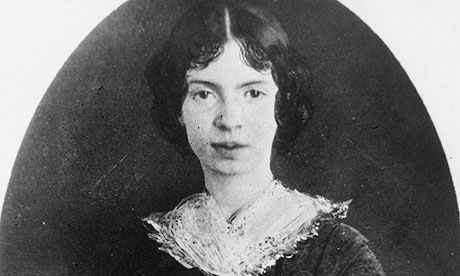
I came upon this poem again (in my post of 20 October 2014), by the matchless Emily Dickinson, and could not resist putting it up here. It has everything: mystery, beauty, and faith. We sometimes tend to see "the beauty of holiness" as "the holiness of beauty": let this small gem, where the two are in exact and perfect suspension, be a lesson to us. 


The feet of people walking home
With gayer sandals go ---
The Crocus --- till she rises,
The Vassal of the Snow —
The lips at Hallelujah!        
Long years of practice bore,
Till bye and bye these Bargemen
Walked singing on the shore.
  
Pearls are the Diver’s farthings
Extorted from the Sea ---        
Pinions --- the Seraph’s wagon
Pedestrian --- once, as we —
Night is the morning’s Canvas
Larceny –- legacy ---
Death, but our rapt attention        
To Immortality.
  
My figures fail to tell me
How far the Village lies ---
Whose peasants are the Angels ---
Whose Cantons dot the skies ---        
My Classics veil their faces ---
My Faith that Dark adores ---
Which from its solemn abbeys
Such resurrection pours.

Wednesday, 5 July 2017

OF POETRY AND ROCK-CLIMBING


“To reach the Creator, I must make myself a creator – at least in so far as my dispositions are concerned. I must break all the moulds in which I constantly fashion myself, for they are invariably restrictive; I must reject all securities, all familiar words, all riches, so as to offer myself utterly poor and virginal to the breath of the Spirit. In this way is the only creativity that counts made possible: the creativity that forms Christ in us, that gives birth to the Son, the creativity which forms ourselves, not just some object, into a poem of love to God, a poem that is completely unique.
Sometimes the Spirit gives me my being through solemn words of love, sometimes through words of joy. There are very mundane words, like bread, or water; there are words of humiliation, of suffering, even of sin. It is necessary to let ourselves be formed, through these various words, so that the glory of God may be sung. 
If I am the poet of the poem which is my life, I am also the priest. The word which is given to me – as a Christian*  and, in a particular way, as a priest – has the power to transform all things into the body of Christ. This is my body, this is my blood, given for you. Just as  God creates, by his Word, at every moment, so he recreates us, takes us up again in all our humanity, with the whole of creation, into the eternal offering of the love of Christ to the Father, into the heart of which we are immersed by the sacrifice of the Mass.” (The Wound of Love, 162-3)

*The priesthood of the faithful is a genuine participation in the priesthood of Christ, and gives us from the start the power of offering ourselves and all things in Christ, with the ordained priest. This dignity conferred in baptism is all too often forgotten.

This is from a chapter on Conversion, called “To Create is to Forget”. At first glance, it seems as remote from our lives as the life of the Carthusian monk who spoke it and those who heard it. This is hardly the Christianity wich we learnt (if we learnt any at all) in a local parish church, in the odd Christmas sermon, or the Christianity we read about and decided was only for those who had the magical gift of faith which we, like most people, just didn’t happen to get. 
When I first read this and other texts in the volume, my reaction was, “Why didn’t anyone ever talk to me about the Christian religion like this?” I felt like the weekend rock climber I once was, coming face to face with El Capitan and those who made its first ascent (3,000 feet of smooth vertical or overhanging granite).
Now, having read it a number of times and thought about it, I realise that while it is the word of a contemplative monk and a priest – and thus of someone who can and must devote all his time and energy to this alone – we others are not necssarily excluded from it. If we absorb this, say, in our morning prayer at the beginning of the day, and keep its essence (as St Francis de Sales said) as a “posy” or buttonhole bouquet to sniff at periodically in the intervals of work or play –- when we are driving, or bicycling, or walking; while we are doing the dishes or cooking –, then the breaking of moulds, the emptying out, the opening of inner doors and shutters, followed by the delicate reshaping of our inwardness to become a line, or a stanza, of that poem becomes not only possible but an entirely natural step to take. 
(The third paragraph, of course, goes quite far, and is a challenge. Even for the Carthusian priest, saying that all things can become the body of Christ might be questioned by his superiors as being dangerously Teilhardian; but his insistence on the priesthood of all believers, conferred by baptism, is currently very much echoed even by our local parish priest. More about that in a future post.)

El Capitan, Yosemite, California